THE WITHERSPOON FORUM
Overview
The Witherspoon Forum is an online seminar series for high school students who are serious about their studies, relentlessly curious about the world, and eager to wrestle with fundamental questions of life. Named after the center of civic life and philosophical thought in the ancient world, the Forum brings bright young scholars into conversation with key political, philosophical, and religious thinkers on contemporary topics in ethics, politics, and culture.
Each academic year, the Forum invites students to explore a common theme through interdisciplinary approaches, including philosophy, theology, political theory, and history. No subject matter expertise is expected, and no grades are assigned. Instead, the Forum fosters rigorous conversation, meaningful reflection on fundamental questions, and intellectual friendship.
How the Forum Works:
-
Applications are open to students in 10th-12th grade.
-
There are ten seminars in the Forum. Each seminar includes three unique sessions, with one session per week for three weeks. Students are expected to attend all three sessions of a seminar.
-
Once accepted, participants will be charged a non-refundable $25 fee for each three-session seminar that they register for. Registration fees will be waived for returning Witherspoon Scholars and MLCT alumni.
-
In the application, students will be asked to submit basic contact information, a short explanation of their interest in the topic, and a current resume or CV. Students will also select the seminars they wish to attend.
-
Space is limited in each seminar. Students may apply for priority consideration in up to 5 seminars, and every effort will be made to place them in those seminars. If the seminar is full, students will be placed on a waitlist for that seminar.
-
In addition to their top 5 priority list, students may join the waitlist for any/all additional seminars that they wish to attend.
-
Waitlist decisions will be made approximately one month before each seminar start date. Students will be notified by email if there are any spots remaining in a seminar, and spots will be filled on a first-come, first-served basis.
-
Those who attend three or more seminars throughout the year will be recognized as Witherspoon Scholars, and they will receive priority consideration for other high school seminars, including Witherspoon Institute’s week-long summer seminar in Princeton, Moral Life and the Classical Tradition.
Click on the button below to apply:
The 2026-27 Forum will explore the topic “Freedom From & Freedom For” in honor of the 250th anniversary of the Declaration of Independence.
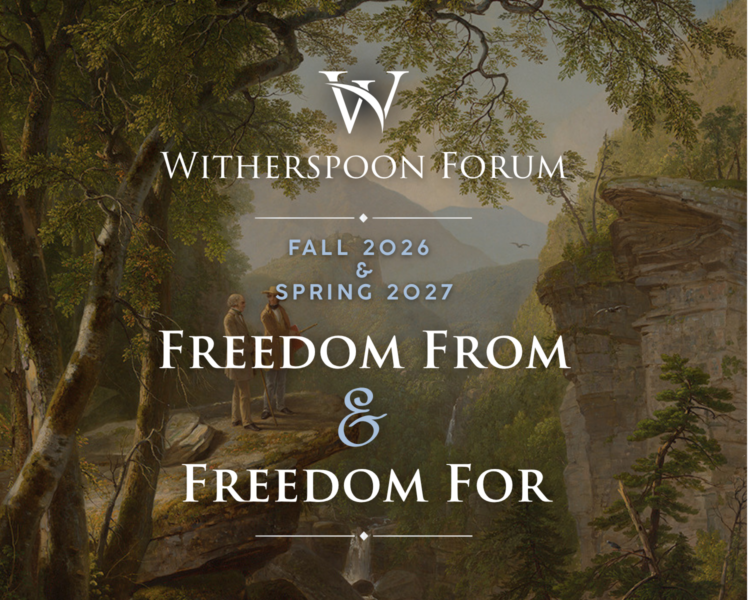
Freedom From & Freedom For
Two hundred and fifty years ago, the American Founding Fathers declared the Thirteen Colonies to be “free and independent states” and described the citizens therein as “a free people.” But what does it mean to be free? Is freedom a series of protections against limitations or bonds, or a vision of human action that places duties and responsibilities on the free person? Are natural and social obligations intrinsic or extrinsic to the concept of freedom, and how might that inform our interactions with other humans, institutions, or powers? What do free people owe to themselves and others?
In this year’s Witherspoon Forum, we will interrogate the concept of freedom and explore the contrasting (or complementary) visions of freedom as from constraints and for (unto) good ends. Following the Founders, who declared independence only to “form a more perfect union,” we will consider freedom as it relates to interdependency, demanding concern for others rather than dissolving all social ties. We will reflect on what is rightly owed, in freedom, to country, neighbor, God, the opposite sex, children, and strangers. In an age of rapidly changing technology, we will discuss what freedom means in a virtual reality, with online personalities, and alongside artificial intelligences. We will contemplate how natural law and social mores enlarge and shape the demands of freedom. At the end of the year, students will have a robust understanding of the value and purpose of freedom for the human person.
FALL 2026
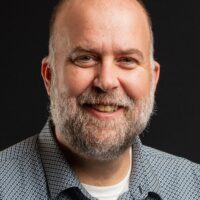
Competing Views of Freedom in America
Led by Micah Watson
Wednesdays at 7 PM ET — Oct 7, 14, and 21
“We all declare for liberty; but in using the same word we do not all mean the same thing.” So declared Abraham Lincoln in an April, 1864 speech in Baltimore, Maryland. The same could have been said in 1776, and remains true in 2026. In these three sessions we’ll explore the contested meanings of liberty, and two rival candidates in particular. There is the liberty of the unencumbered self, such that one is “free” from external restraints that may frustrate whatever it is one happens to want. Then there is the liberty of being free to pursue what one should do and become what one should be, as informed by a moral understanding of human flourishing that we can honor but do not author ourselves. We will engage with the philosophy underlying each approach, discuss how various liberties jostled together historically in the American political experiment, and ask how liberty currently manifests in the lives of modern Americans as we pursue happiness.
About Micah Watson:
Micah Watson, Ph.D., is the Paul Henry Chair for the Study of Christianity and Politics at Calvin University. He is the co-author of C.S. Lewis on Politics and the Natural Law (Cambridge, 2016), and Hopeful Realism: Evangelical Natural Law and Democratic Politics (IVP Academic, 2025). He enjoys freely pursuing the good life in western Michigan with his wife, four adult daughters, one high school son, and a son-in-law.
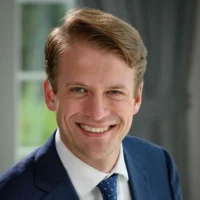
Education and Duty
Led by Luke Foster
Tuesdays at 7 PM ET — Oct 20, 27, and Nov 3
Once higher education was overtly aristocratic, a marker of the leisured, ruling class. The American Founders understood their democratic republic to require leadership by liberally educated statesmen. Today elite colleges still select a talented few from society, instill distinct habits and beliefs in them, and commission them to wield great influence. Of those to whom much is given, much is asked, yet we lack a shared vocabulary for the responsibilities that the privilege of education should confer. What do universities owe our democratic republic? What duties do college students and graduates bear toward their fellow-citizens? This series examines three classic texts that can shape the attitude we bring to the pursuit of higher learning.
About Luke Foster:
Dr. Luke Foster is Assistant Professor of Government at Hillsdale College in Washington, D.C. From 2022-24 he was a Postdoctoral Research Scholar at the Center for Citizenship and Constitutional Government at the University of Notre Dame, and from 2020-22 he was a Visiting Research Fellow at Sciences Po Paris. His research and teaching concerns American and French political thought on aristocracy, democracy, and the role of the university in elite formation.
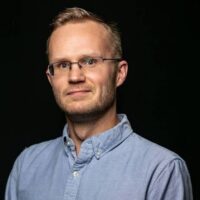
Freedom in the Era of AI
Led by Joseph Vukov
Wednesdays at 7 PM ET — Oct 28, Nov 4, and Nov 11
The rise of artificial intelligence challenges human freedom along several fronts. How do we retain robust agency when our decisions are nudged this way and that way by algorithms? How to understand responsibility in world where AI agents, autonomous weapons, and other new technologies are taking over human decision-making? Do we have any obligations to the strangers (and now, chatbots!) we meet online? This forum will explore these questions and other questions at the intersection of human freedom and modern technology.
About Joseph Vukov:
Dr. Joseph Vukov is an Associate Professor of Philosophy and the Associate Director of the Hank Center for the Catholic Intellectual Heritage at Loyola University Chicago. He is the author of several books, including the forthcoming book Reclaiming Reality. Vukov serves on the AI Research Group, convened by the Dicastery for Culture and Education, and is the President of Philosophers in Jesuit Education.
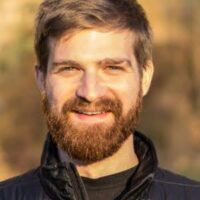
Dignity Beyond Accomplishment: Disability, Meritocracy, and Lives Worth Living
Led by Justin Hawkins
Tuesdays at 7 PM ET — Nov 10, 17, and 24
This seminar will investigate the relationship between disability and dignity in a meritocratic society that attaches dignity to accomplishments. What is a disability, and what does a society owe to those who are disabled? Is disability compatible with a life worth living, and what are the social consequences of even asking the question?
About Justin Hawkins:
Justin R. Hawkins, PhD, is a postdoctoral researcher in medical ethics at the Columbia University Irving Medical Center, where he co-directs the Columbia Character Cooperative, an initiative for the study and cultivation of virtue among medical students and residents. He received his PhD with distinction from Yale University in 2024. His writing has appeared in Perspectives in Biology and Medicine, Comment, Plough, The Hedgehog Review, and elsewhere.
“With Freedom’s Holy Light”? What We Owe to God and to Country
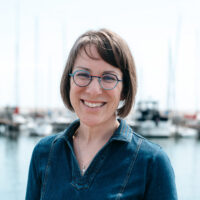
Led by Karen Taliaferro
Wednesdays at 7 PM ET — December 2, 9, and 16
Is duty to country an extension of duty to God? Do we owe allegiance to our country because the country itself is owed loyalty, or only because God commands obedience to the governing authorities? This seminar asks students to consider what citizens of what St. Augustine called “the City of Man” owe to both their earthly city and to God – and what their obligations are if the two conflict. However, it explores these obligations to God and Caesar in light of the notion of freedom – the freedom that is attached to basic human dignity, as well as the freedom that flows from a life of well-ordered commitments.
About Karen Taliaferro:
Karen Taliaferro, PhD, is Associate Professor of Humanities in the Hamilton School at the University of Florida. She previously taught at Arizona State University. In 2024–2025, she was a Fulbright Fellow in Morocco, where she previously served as a Peace Corps Volunteer. Her research interests include ancient and medieval political philosophy as well as religion and politics, with a particular emphasis on Islamic thought.
SPRING 2026
Love and Responsibility: Eros, Agape, and Justice in Dating and Marriage
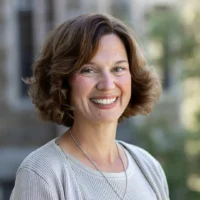
Led by Janet Madigan
Tuesdays at 7 PM ET — Jan 26, Feb 2, and Feb 9
What do we owe our romantic partners? Does sexual freedom consist in surrender to the “divine madness” of eros (romantic passion), or in the voluntary restraint of agape (self emptying love)? What, if any, is the importance of philia (friendship love) to our dating relationships? In this seminar we will delve into John Paul II’s teaching on sexual ethics and Aristotle’s teaching on friendship to explore the answers to these questions.
About Janet Madigan:
Janet Madigan, PhD, received her doctorate in political philosophy from the University of Maryland. She teaches humanities at the Wilberforce School in Princeton, NJ, and is an occasional lecturer at Princeton University. She is the author of Truth, Politics, and Universal Human Rights (Palgrave: 2007), and has previously taught at Northeastern University and the United States Naval Academy.
Competing Gods: How to Live with Many Religions
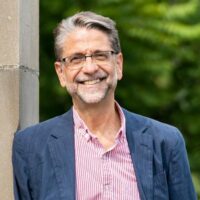
Led by Ephraim Radner
Tuesdays at 7 PM ET — Feb 23, Mar 2, and Mar 9
America names “religious freedom” as a core value, but the value is stranger and more contested than the phrase suggests. This seminar traces how religious plurality has been imagined, resisted, and managed across the Western tradition, in three movements. We begin with the ancient world: Israel’s own struggle to reconcile “many gods” with the sovereignty of the one God, and the Greek and Roman conviction, culminating in Cicero, that shared worship is a civic duty rather than a private option. We then turn to the long medieval achievement of religious homogeneity — a unity Augustine, writing amid the collapse of Roman North Africa, first presses socially, and which Aquinas later manages at its margins — asking what such unity secures and what it costs. We close with the modern reversal: from Castellio’s and Locke’s arguments for toleration to Paine’s and Rawls’s attempts to found public life on a rational common ground beneath the competing gods — and we will ask, directly, whether that last strategy has actually worked.
About Ephraim Radner:
Ephraim Radner, PhD, is Professor of Historical Theology (Emeritus) at Wycliffe College at the University of Toronto, and an Anglican/Episcopal priest. He is the author, most recently, of various books on Scripture, the Holy Spirit, the Church, and the nature of the human person, including Mortal Goods (2024), and A Time to Keep (2016). A former missionary in Burundi (Africa), he has been active in the affairs of the global Anglican Communion and now lives with his family in Denver, Colorado.
Freedom, Throwaway Culture, and the Vulnerable at the Edges of Life
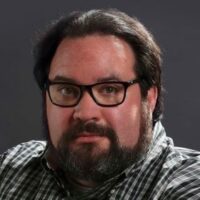
Led by Charles Camosy
Wednesdays at 7 PM ET — Feb 24, Mar 3, and Mar 10
What does a free society owe to those who cannot advocate for themselves: prenatal and neonatal children, the person with catastrophic brain injury/disease, and those who are terminally ill? This seminar explores one of the most urgent and under-examined questions in contemporary (bio)ethics: whether authentic freedom includes the responsibility to protect, encounter, and show hospitality for the most vulnerable among us, even when doing so is (by standards of our throwaway culture) burdensome and inconvenient. Drawing also on philosophy, bioethics, and social science, students will wrestle with what makes a human life valuable, what obligations the strong owe the weak, and what it means to build a counterculture of encounter and hospitality.
About Charles Camosy:
Charlie Camosy teaches moral theology and bioethics at the Catholic University of America. Before that, he spent three years teaching bioethics at the Creighton School of Medicine and moral theology at St. Joseph Seminary in New York. Among other places, his articles have appeared in the American Journal of Bioethics, Journal of Medicine and Philosophy, New York Times, The Atlantic, New York Post and America magazine. He has columns with the Washington Examiner and Religion News Service and does regular Q&As for OSV News. He is the author of eleven books, eight of which have won awards.
Peacemaking and the Use of Force
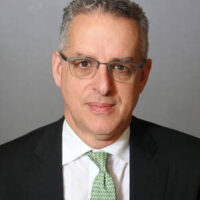
Led by Joseph Capizzi
Tuesdays at 7 PM ET — Mar 30, Apr 6, and Apr 13
The intellectual tradition from which the “just war” account was born understands all politics as ordered towards peace (pax temporalis). That conception of politics, within which the use of force is a necessary element, includes not only friends, allies, and fellow-citizens, but ultimately is ordered to an inclusive unity of wills including even political opponents. We will explore this claim in the seminar, focusing on texts from Augustine, Aquinas, Vitoria, and Suarez, and recent papal interventions. Doing so will allow us to understand the so-called “just war theory” as an account of peacemaking in a fallen world.
About Joseph Capizzi:
Joseph E. Capizzi, PhD, is the McGrath-Cavadini Director of the McGrath Institute for Church Life at the University of Notre Dame. Prior to joining the McGrath Institute, he served as dean of the School of Theology and Religious Studies and ordinary professor of moral theology at The Catholic University of America. He teaches in the areas of social and political theology, with special interests in issues in peace and war, citizenship, political authority, and Augustinian theology. He has written, lectured, and published widely on just war theory, bioethics, the history of moral theology, and political liberalism.
Friendship and the Good Life
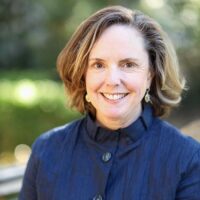
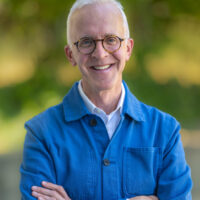
Led by Elizabeth Corey and Sean Keilen
Wednesdays at 7 PM ET — Mar 31, Apr 7, and Apr 14
“For without friends no one would choose to live, though he had all other goods.” This famous line from Aristotle sums up the importance of friendship in human life. But what does friendship mean in our modern context? We’ll explore the various kinds and inflections of friendship by reading excerpts from Shakespeare, Cicero, Samuel Johnson, and Montaigne, among others.
About Elizabeth Corey:
Elizabeth Corey, PhD, teaches political philosophy at Baylor University, where she also directs the Honors Program. The author of Michael Oakeshott on Religion, Aesthetics, and Politics and a regular contributor to First Things, Corey has written for The New York Times, The Wall Street Journal, The Atlantic, The Chronicle of Higher Education, and National Affairs. Her book about liberal education and the affections, The Heart of Learning, will be published in January, 2027. She lives in Waco, Texas.
About Sean Keilen:
Sean Keilen, PhD, is professor of literature at the University of California, Santa Cruz, where he directs Shakespeare Workshop, a research center that promotes scholarship, community engagement, and theatrical performance. He is the author of Vulgar Eloquence: On the Renaissance Invention of English Literature (Yale UP, 2006) and the coeditor of Shakespeare: The Critical Complex (Garland, 1999) and The Routledge Research Companion to Shakespeare and Classical Literature (Routledge, 2017). Princeton University Press published his new book, Shakespeare’s Scholars: Three Lessons from the Liberal Arts, in 2026. Sean works as the head of dramaturgy at Santa Cruz Shakespeare, a longstanding professional theater company.
Click on the button below to apply: