In March 2026, Witherspoon alumni were invited to reflect on a question at the heart of our work: what, during their time with us, proved most meaningful and lasting? This first Alumni Spotlight features three of those stories.
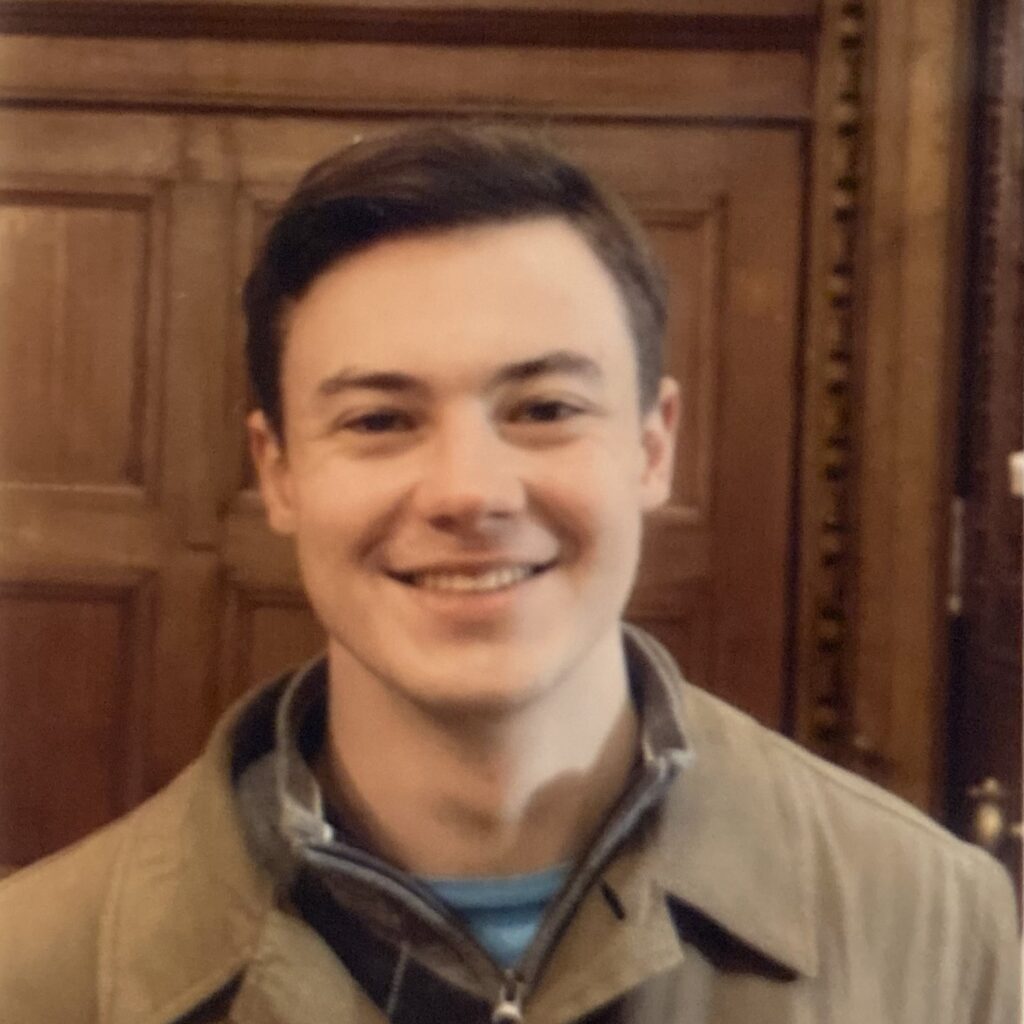
Isaiah Fletcher
Moral Life and the Classical Tradition 2021,
John Witherspoon Fellows 2021-2022
After my final seminar as a John Witherspoon Fellow, I wrote the following to the other Fellows:
Standing on a moving walkway watching the airport go by, I was full of thoughts, fears, worries. I kept thinking, “Now that I’ve tasted a bit of Heaven, a bit of the good life, how can I go back to Earth?” Three days was more than enough time to see that you guys were the real deal, people who are genuine, funny, thoughtful, honest, integral, and constantly trying to find more and more of the truth of this world (even if we can’t understand ‘the’ good). But now that we have gone our separate ways, that fear remains. The fear that this was only temporary and that nothing lasts forever. And this fear is something that will most likely be constant throughout our lives. But I believe that the only way to overcome this fear is through love, love in the sense of pouring ourselves out sacrificing for one another. Indeed, y’all are the first people I’ve ever wanted to just give everything to: my life, my experience, my knowledge in its limited form, my work, and all that I am, through spending time with one another, talking with one another, visiting each other, and taking these little flowers of friendship that have been planted in our hearts and nurturing them. I have written down more than ten times throughout the seminars over the last few days, “Remember this, these people, these moments, because this is what life can be like.” And now that I am home, I still can’t get y’all out of my head. I hope that I never do.
Perhaps that shows you a bit of what Witherspoon was like for me: a place that taught me in many ways what it means to truly live.
After a tour of Princeton University, the participants of the Witherspoon Institute’s Moral Life and Classical Tradition seminar were given the opportunity to explore the town of Princeton. Not knowing many other girls, I initially stuck by a friend who attends my high school. At some point, we began talking with another girl from the program. My first impression was that this young woman was quiet, but not shy, and kept to herself, but was not awkward. Eventually, we started talking about faith, and the girl informed my friend and me that she is Protestant. I am Roman Catholic. As she began speaking about her church, I thought to myself, “Here we go again. Just another person to debate with about Mary, sola scriptura, and the Eucharist.” However, as the conversation proceeded, I observed the girl’s disposition. She was attentive and acted like my words were worthy of her attention rather than just inferior arguments to which she had to respond. The behavior of this young woman prompted me to reflect on myself. While I had tried to cling to what I knew, this girl exhibited an openness to both meeting new people and hearing new ideas. As I got to know this young woman even more, I noticed that her humility spanned further than intellectual discourse. For one, she was an exceptional athlete. I remember going for a run with her one morning. Although she was much more fit than I was, she made me feel like her equal, just as she had done in our conversation about faith. Although my interactions with her may seem common, this young woman embodied everything the Witherspoon Institute seeks to impart into students. To listen and not assert. To ask and not assume. And as this young woman exemplified, to seek truth above all else.

Bridget Kelly
Moral Life and the Classical Tradition 2025
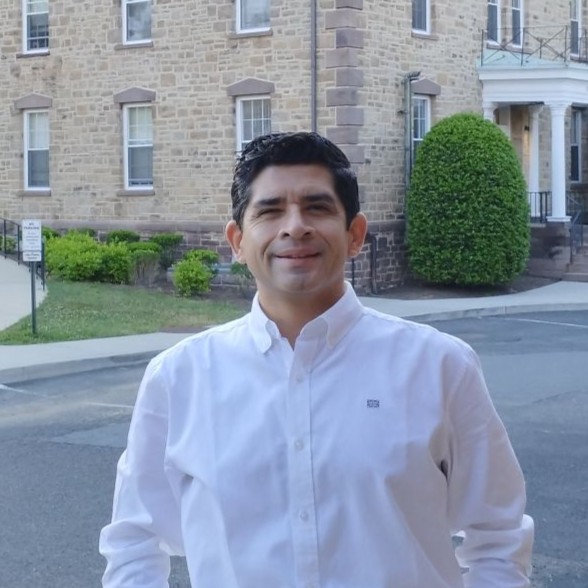
Eduardo Acosta Yparraguirre
Natural Law and Public Affairs 2024
One of my main reasons for applying to the Natural Law and Public Affairs seminar was Robert P. George. I have studied his work, I cite him in my articles, and I also use him in class with my students, so the idea of listening to him and learning from his own words was fascinating to me. The first session was on June 26, 2024. I had received the schedule and knew it started at 9:00 am, but for some reason, I was delayed. Upon arriving, I took a seat at the other end from Professor George. It seemed like everyone had been introducing themselves. Then George looked at me and asked: “Good morning, can you tell us something about yourself?” I replied, “My name is Eduardo Acosta, I’m from Peru, I’m a lawyer, and I am your fan.” George turned to look at Professor Tollefsen as if to ask: What did he just say? He probably thought that “fan” was not the most appropriate word for an academic event. But George, like Christopher Tollefsen, Sherif Girgis, and Ryan Anderson, is a hero of our times, if we define a hero as someone who runs toward the place others flee from. His steadfast defense of law principles in favor of life, family, and Natural Law in times when everything seems to be against it is an inspiration for those of us who follow behind. I have used George’s scholarly work in my Philosophy of Law classes in Peru, alongside John Finnis, Joseph Boyle, Germain Grisez, and Jonathan Crowe. On the last day of the seminar, I asked Professor George to sign my copy of “Entre Derecho y la moral”. Smiling, he said yes. I told him again that I was a fan, this time just to see his reaction, and his face changed; he got serious. I think his humility makes it hard for him to believe he’s a star and that he has fans. The Witherspoon Institute is doing a great job.