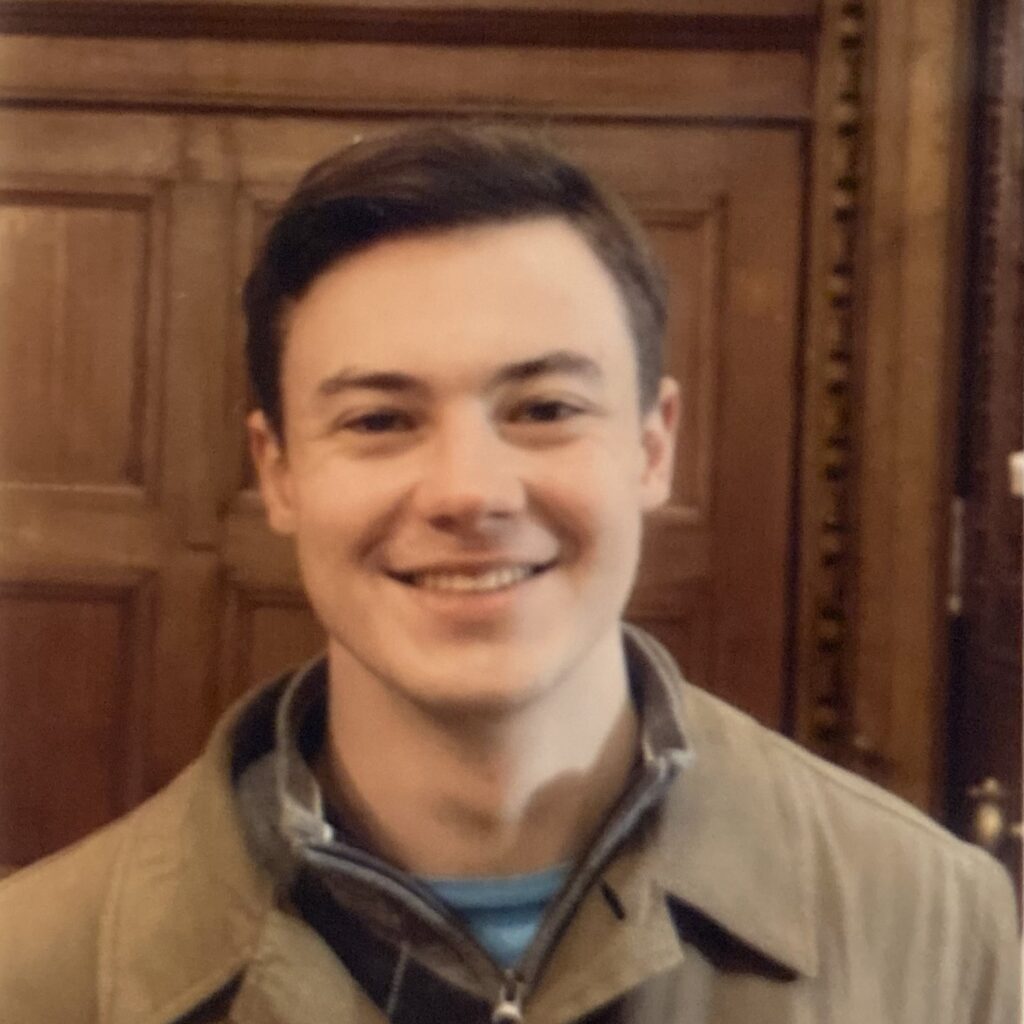
We are proud to celebrate Senior Fellow Bradford P. Wilson on his nomination by President Trump to serve as Archivist of the United States. A distinguished scholar of American constitutional thought and longtime leader in civic education, Brad has made enduring contributions to the study and preservation of our nation’s foundational principles. His nomination is a testament to a career dedicated to intellectual rigor and public service. We extend our warmest congratulations and best wishes as he advances through the Senate confirmation process.
Uncategorized
R. J. Snell on On Sloth and the Refusal of Joy
In a recent episode of the Thomistic Institute Podcast, R. J. Snell, Director of Academic Programs at the Witherspoon Institute and Editor-in-Chief of Public Discourse, offers a penetrating meditation on one of the most misunderstood spiritual maladies of modern life: sloth.
Titled “The Terrible Covenant of Sloth: Boredom and the Resistance of Joy,” the lecture was delivered at New York University and confronts a phenomenon many students and professionals alike recognize: restlessness, distraction, anxiety, and a persistent sense of boredom amid abundance and opportunity.
As Dr. Snell explains, sloth is not simply laziness. Drawing from St. Thomas Aquinas and the broader Catholic intellectual tradition, he presents sloth as a deeper spiritual resistance, a sadness or aversion toward the highest good. It is not merely a failure to act, but a refusal of joy itself. In this light, contemporary busyness, achievement culture, and endless distraction can become symptoms of a more fundamental problem: an unwillingness to receive and respond to the good that calls us.
You can listen to the full episode of The Thomistic Institute Podcast here:
https://podcast.thomisticinstitute.org/the-terrible-covenant-of-sloth-boredom-and-the-resistance-of-joy-dr-rj-snell/
Alumni Contest – Tell Us Your Story
We’re inviting Witherspoon alumni to take part in a storytelling contest. If you’ve participated in a Summer Seminar, academic-year program, the Forum, or the John Witherspoon Fellowship, fill out the short survey below and submit a reflection (500 words or fewer) on a favorite memory or meaningful experience. The top five submissions will be featured on our website, and will receive a signed copy of R. J. Snell’s recent book.
Deadline is March 30th.
Share your story here.
Help Us Grow our High School Programs
In just one year, enrollment in the Witherspoon Forum has grown by 138%.
What began as a small gathering of high school students committed to serious intellectual friendship is now a growing national community. Students are seeking real conversation and thoughtful engagement with enduring questions about freedom, virtue, faith, and the common good.
In a culture marked by distraction and noise, young people are looking for spaces where they can read closely, think deeply, and speak honestly.
Our next goal is ambitious: to double enrollment again next year.
We need your help.
If you know a high school student who would thrive in rigorous discussion and genuine intellectual community, please encourage them to apply. A personal recommendation makes all the difference.
Together, we can help form the next generation for thoughtful leadership and moral courage.
Learn more at winst.org/forum.
A Civic and Educational Response to Campus Extremism
In a recent op-ed for The Wall Street Journal, “A Solution to Campus Extremism,” Robert P. George, the Witherspoon Institute’s Herbert W. Vaughan Senior Fellow, argues that increasing extremism on both sides of the political spectrum is not an accident, nor merely the result of a few radical voices. It is the predictable outcome of an educational system that has abandoned the intellectual and moral foundations of a true liberal education.
In his article, Professor George contends that universities have failed to provide students with a substantive grounding in the classical liberal tradition and civic education, the disciplines that cultivate critical thinking, humility, rational debate, and an appreciation for shared humanity. When students are deprived of that inheritance, they become vulnerable to dogmatism and polarization, whether from the left or the right.
The answer, he argues, is not censorship or surveillance, but a renewal of classical and civic learning, a recommitment to open inquiry, and the rigorous pursuit of truth.
At the Witherspoon Institute, we share this conviction. Our work is dedicated to renewing the intellectual and moral foundations of our civil society through education rooted in timeless wisdom and ordered toward truth.
We invite you to read the article and to join us in this effort to rebuild the conditions for genuine learning and civil friendship.
Summer Seminars at the Witherspoon Institute
Serious Study. Honest Conversation. Lifelong Friendship.
Each summer, the Witherspoon Institute welcomes exceptional high-school, undergraduate, and graduate students from around the world to Princeton, New Jersey, for a series of intensive residential seminars in philosophy, public affairs, and the foundations of a flourishing human life.
Grounded in classical and contemporary texts and led by distinguished scholars, the Summer Seminars offer students the opportunity to examine the most important moral, cultural, and political questions of our time through rigorous, Socratic discussion. Together, participants grapple with enduring questions about freedom and responsibility, natural law and human dignity, the impact of technology on the human person, and the meaning of community and friendship in a healthy society.
Applications for Summer 2026 are now open.
Learn more at winst.org/summer